Kingdom Hearts lore is extensive, convoluted, and often bewildering to navigate. This isn’t necessarily a criticism – after all, beloved franchises like Metal Gear have built devoted followings around similarly complex narratives – but even veterans who have played every installment in the series often find themselves consulting wiki pages and lore explanation videos before they can recall the specifics of any given plot point. The franchise, which began in 2002 as an unlikely collaboration between Square Enix and Disney, has grown into a sprawling multiverse of interconnected stories, character arcs, and mythology that spans over a dozen games across multiple platforms. That’s precisely why it’s so remarkable that director Tetsuya Nomura and the development team at Square Enix have demonstrated such meticulous attention to a small but significant detail about Heartless behavior in the upcoming Kingdom Hearts 4.
The Coco World Revelation at D23
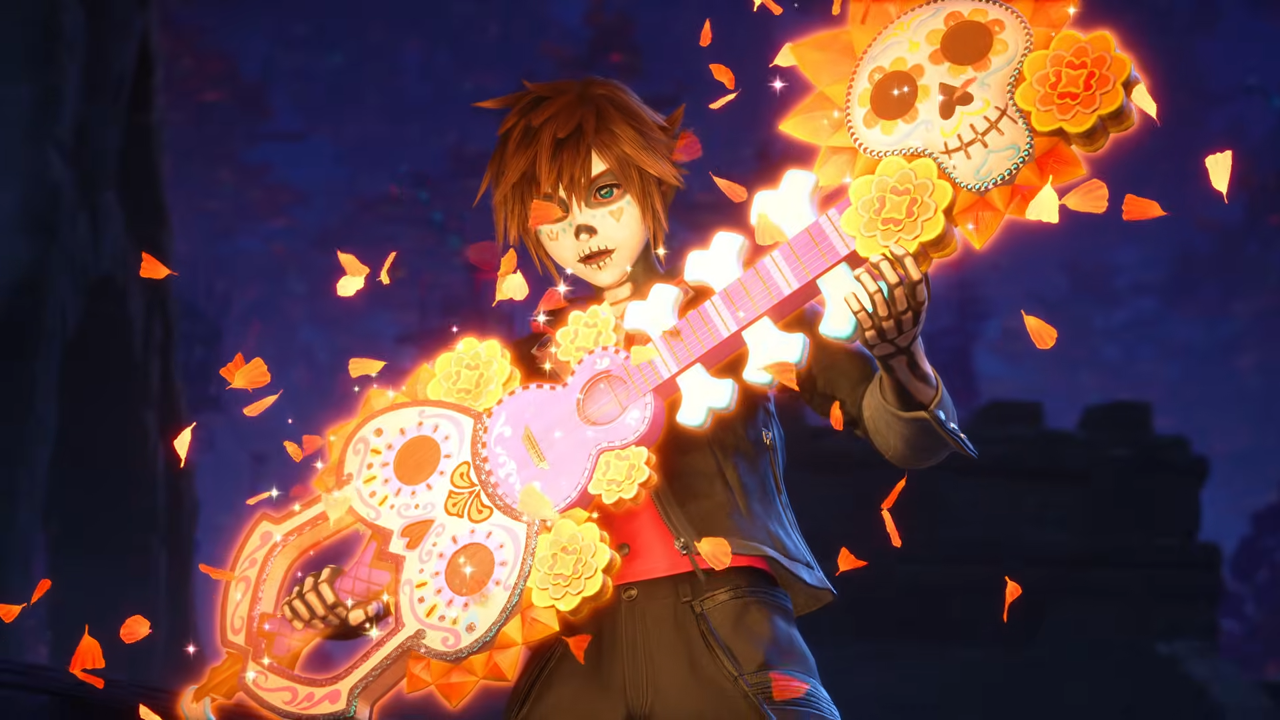
The first Disney world officially announced for Kingdom Hearts 4 is based on Pixar’s beloved 2017 film Coco, which tells the story of a young aspiring musician named Miguel who accidentally finds himself transported to the Land of the Dead during Día de los Muertos celebrations. In the recent D23 trailer that debuted to eager fans, viewers witnessed a fascinating scene: a pair of Heartless emerge from the shadows and begin creeping menacingly toward Miguel, the film’s protagonist. What caught the attention of observant fans was that these iconic enemies completely ignored the skeletal denizens surrounding them in the Land of the Dead, focusing their attention solely on Miguel – the only living person in the vicinity.
This subtle but deliberate design choice didn’t escape the notice of the dedicated Kingdom Hearts community. Shortly after the trailer’s premiere, a Kingdom Hearts enthusiast known as Noir LilBomber shared a compelling theory on social media: “One thing me and my friends noticed in the Kingdom Hearts 4 trailer is that the heartless only appear to react to Miguel and not the other characters. This is in line with the Ansem report from KH1 that stated the heartless only react to LIVING test subjects.” This observation quickly spread throughout the fandom, sparking discussions about the remarkable continuity the developers have maintained across more than two decades of game releases.
Tracing the Lore Back to 2002
The detail in question traces its origins all the way back to Ansem’s Report 4, a collectible document that appeared in the original Kingdom Hearts game released in 2002. These reports, scattered throughout the game world for players to discover, provided crucial exposition about the nature of the Heartless and the experiments conducted upon them. The fourth report specifically states: “The Heartless appear in groups, and are multiplying rapidly. I’ve provided them both living and nonliving samples. They’ve responded only to the living.” This seemingly minor piece of world-building established a fundamental rule about how these creatures of darkness operate – a rule that the development team has apparently held sacred for over twenty years.
What makes this continuity even more impressive is that this detail actually manifested in a meaningful gameplay and narrative context within the original game itself. When protagonist Sora and his companions Donald and Goofy first arrive in Halloween Town – the world based on Tim Burton’s The Nightmare Before Christmas – they encounter an unusual situation. The Heartless in this realm are essentially dormant and inert, showing no aggression toward the largely undead cast of characters that populate Jack Skellington’s spooky domain. It’s only after Skellington and the eccentric Dr. Finkelstein construct an artificial heart designed to give the Heartless something to desire that these creatures become violent and hostile. This narrative beat reinforced the established lore while creating an interesting puzzle for players to solve.
A Testament to Nomura’s Vision
The consistency displayed in Kingdom Hearts 4 represents a remarkable achievement in modern game development, particularly for a franchise with such labyrinthine lore. Tetsuya Nomura, who has served as the series’ director and primary creative force since its inception, has overseen a narrative that spans console generations, includes spin-offs on mobile devices and handhelds, and incorporates properties from both Disney’s vast catalog and Square Enix’s Final Fantasy universe. Maintaining coherent rules for a fictional universe under these circumstances requires extraordinary attention to detail and a deep reverence for the source material.
The Coco world implementation demonstrates that the Heartless appearing in the Land of the Dead are behaving exactly as established lore dictates – they’re only interested in the one living being they can detect: Miguel. Honestly, this level of dedication to continuity deserves recognition and applause. Many players and critics alike wouldn’t have noticed or complained if this particular detail had been swept under the rug in favor of more conventional enemy encounters. However, the developers at Square Enix are clearly committed to ensuring that even the most obscure fragments of Kingdom Hearts mythology survive and thrive in this long-awaited sequel. For a fanbase that has waited nearly a decade since Kingdom Hearts 3’s release in 2019, these small touches of authenticity signal that the team understands what makes this franchise special. Kingdom Hearts 4 doesn’t have a confirmed release date yet, but if the attention to detail shown in this trailer is any indication, fans have plenty of reasons to remain optimistic about the next chapter in Sora’s ongoing journey.
Expert Opinion: This attention to decades-old lore details suggests that Kingdom Hearts 4 is being developed with a deep respect for long-time fans rather than attempting to reboot or simplify the franchise for newcomers. Such meticulous continuity management is increasingly rare in modern game development, where reboots and retcons often take precedence over honoring established canon. If Square Enix maintains this level of care throughout the entire game, Kingdom Hearts 4 could represent the most narratively cohesive entry in the series since the original PlayStation 2 era.