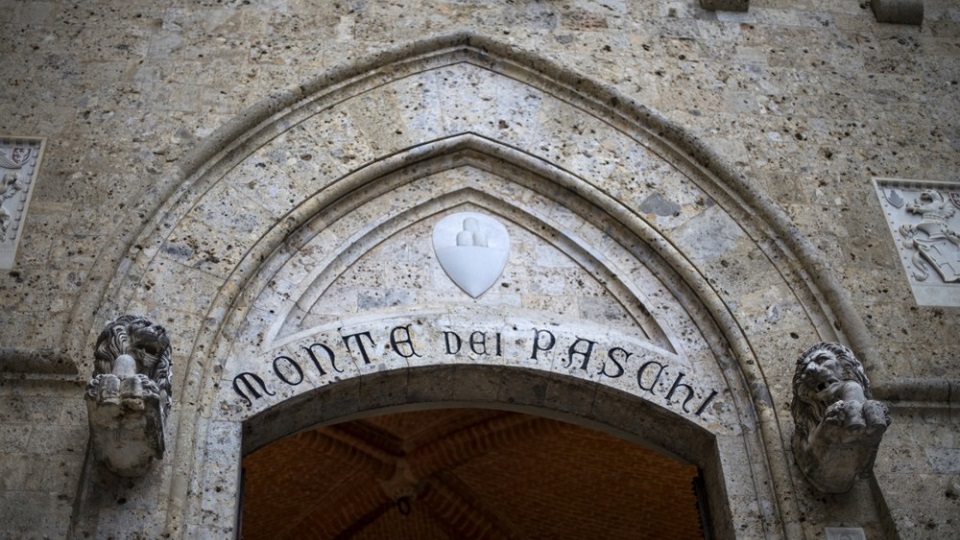
Monte dei Paschi di Siena, the world’s oldest operating bank founded in 1472, is making an aggressive move to reshape Italy’s banking landscape by pursuing the acquisition of two rival financial institutions. The historic Tuscan lender aims to create a new banking powerhouse with combined assets exceeding 450 billion euros, a strategic maneuver designed primarily to protect itself from becoming a takeover target of Italy’s largest bank, Intesa Sanpaolo. This defensive consolidation strategy marks a dramatic turnaround for an institution that just a few years ago required multiple government bailouts to survive.
The ambitious acquisition plan represents one of the most significant developments in European banking consolidation in recent years. Monte dei Paschi, headquartered in the medieval city of Siena, has been at the center of Italy’s banking troubles for over a decade. The bank nearly collapsed in 2017 and required a state rescue that saw the Italian government inject billions of euros to keep it afloat. Now, having returned to profitability and reduced its mountain of bad loans, the institution is positioning itself as an acquirer rather than a target, signaling a remarkable reversal of fortunes in the competitive Italian financial sector.
A Historic Institution’s Fight for Independence
Monte dei Paschi di Siena carries a legacy that spans more than five centuries, predating the discovery of the Americas by Christopher Columbus. Founded during the Renaissance era to provide loans to the poor and support local commerce, the bank has witnessed the rise and fall of empires, world wars, and countless economic crises. However, the 2008 global financial crisis and its aftermath proved particularly devastating. The bank’s ill-timed acquisition of rival Antonveneta in 2007, just before the financial meltdown, left it severely weakened and burdened with toxic assets that took years to address.
The Italian government currently holds approximately 11% of Monte dei Paschi’s shares, a remnant of the 2017 bailout that saw taxpayers provide 5.4 billion euros to rescue the struggling lender. Since then, under new management and with significant restructuring efforts, the bank has managed to shed tens of billions of euros in non-performing loans and return to sustainable profitability. This turnaround has now emboldened management to pursue growth through acquisitions, a strategy that would have seemed unthinkable just a few years ago when the bank’s very survival was in question.
Defensive Strategy Against Banking Giant
The driving force behind Monte dei Paschi’s acquisition strategy is the looming threat of Intesa Sanpaolo, Italy’s largest banking group with assets exceeding 900 billion euros. Intesa has long been viewed as a potential acquirer of Monte dei Paschi, and such a takeover would effectively end the independence of the historic Sienese institution. By growing larger through its own acquisitions, Monte dei Paschi hopes to make itself a less attractive or more difficult target for Intesa, while simultaneously achieving the scale necessary to compete effectively in an increasingly consolidated European banking market.
Banking analysts suggest that this defensive consolidation strategy reflects broader trends across the European financial sector, where medium-sized banks face increasing pressure from both larger competitors and nimble fintech startups. Creating a 450 billion euro asset base would position the combined entity as a significant player in the Italian market, though still smaller than Intesa Sanpaolo or UniCredit, Italy’s other banking giant. The success of this strategy will depend heavily on execution, regulatory approval, and the terms of any potential acquisitions, factors that remain uncertain in the complex landscape of European banking regulation.
Implications for Italy’s Financial Future
The outcome of Monte dei Paschi’s acquisition gambit will have far-reaching implications for Italy’s banking sector and the broader European financial system. Italy has long struggled with a fragmented banking landscape characterized by numerous small and medium-sized institutions, many of which lack the scale and efficiency to compete effectively in the modern financial environment. A successful consolidation led by Monte dei Paschi could accelerate this rationalization process while maintaining some diversity in the market, rather than allowing one or two dominant players to control the entire sector.
European Central Bank regulators have generally encouraged consolidation among eurozone banks, viewing larger institutions as better equipped to weather economic storms and comply with increasingly stringent capital requirements. However, authorities also remain mindful of the risks posed by creating banks that are “too big to fail,” a concern that shaped post-2008 financial regulation. As Monte dei Paschi pursues its ambitious growth strategy, regulators will be watching closely to ensure that any deals serve the interests of financial stability and consumer protection, not merely the defensive interests of incumbent management seeking to preserve institutional independence.
Expert Opinion: Monte dei Paschi’s transformation from bailout recipient to aspiring acquirer represents a remarkable turnaround, but the success of this defensive strategy remains far from guaranteed. The bank faces significant challenges in executing multiple acquisitions while maintaining its recently restored profitability, and Intesa Sanpaolo’s deep pockets and strategic patience mean the threat of takeover may simply be delayed rather than eliminated. Ultimately, the coming months will reveal whether this bold gambit represents genuine strategic vision or merely a desperate attempt to preserve independence at any cost.